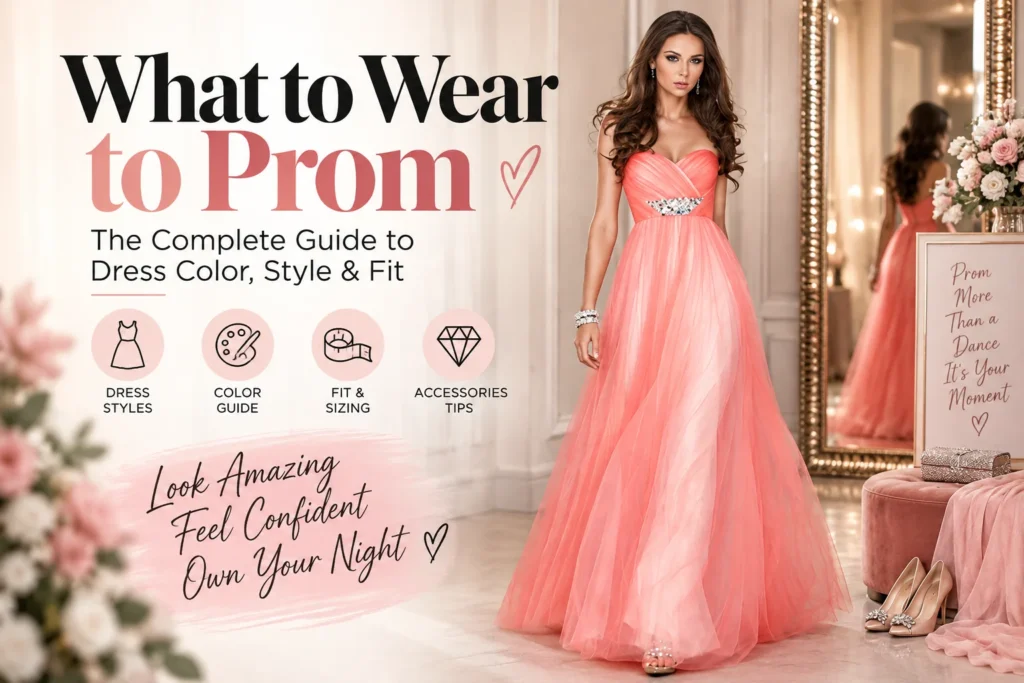
The right prom dress comes down to three decisions: a color that works with your skin tone, a silhouette that fits your body type, and a length and fabric suited to how long you’ll be dancing. Solid, saturated colors like red, royal blue, emerald, and black photograph best and hold up all night, while the silhouette A-line, mermaid, sheath, or ball gown should be chosen around comfort and movement, not just trend. Here’s the full breakdown.
Choosing Your Prom Dress Color
Solid, confident colors consistently outperform pale or muted shades in prom photos and under venue lighting:
- Red: bold and universally flattering across skin tones; the most classic prom color choice.
- Royal blue: striking under both natural and stage lighting; photographs exceptionally well.
- Emerald or deep green: a strong alternative to black that still reads as sophisticated.
- Black: timeless and slimming, but pick a dress with texture (sequins, lace, satin sheen) so it doesn’t look flat in photos.
- Blush or soft pink: the one pale tone that consistently works, especially in shimmer or satin finishes.
Buying tip: avoid very light or “dim” pastel shades under artificial venue lighting they tend to wash out in photos. If you love a pastel, choose one with metallic thread, sequins, or a glossy fabric finish to add depth.
Prom Dress Styles: Which One Fits Your Night
| Style | Best For | Why It Works |
|---|---|---|
| A-line/maxi | Most body types | Flattering, comfortable for dancing, forgiving fit |
| Mermaid/fit-and-flare | Hourglass shapes | Dramatic silhouette, best for those confident in a fitted cut |
| Sheath/column | Petite or tall slim frames | Sleek, modern look; easiest to accessorize minimally |
| Ball gown | Formal, traditional proms | Maximum drama; needs more room to move on a crowded dance floor |
| Two-piece set | Anyone wanting a modern twist | Comfortable, easy to move in, stands out from typical one-piece styles |
Matching a Dress to Your Body Type
- Pear shape (hips wider than shoulders): A-line or ball gown styles balance proportions.
- Apple shape (fuller midsection): Empire waist or a dress with ruching at the middle skims the stomach.
- Hourglass shape: Mermaid or fitted sheath styles follow your natural waist.
- Rectangle/athletic shape: Dresses with a defined waist (belt, ruching, or a fitted bodice) add curve.
- Petite frames: Knee-length or a shorter maxi with a slit a full-length gown can overwhelm a smaller frame unless it’s fitted at the waist.
Fabric & Comfort for a Full Night of Dancing
- Satin/charmeuse: structured and photogenic, but least stretch best for dresses without a fitted waist.
- Stretch crepe or jersey: moves easily on the dance floor, ideal for fitted or mermaid styles.
- Tulle: adds volume for ball gowns; check that layers are soft, not scratchy, against bare arms.
- Sequin/mesh overlay: eye-catching under lights, but confirm there’s a smooth lining underneath so sequins don’t scratch skin during dancing.
Buying tip: if the dress has zero stretch (100% satin, no spandex), size up slightly or confirm you can comfortably raise your arms and sit down prom nights involve a lot of both.
Accessorizing Your Prom Look
- Shoes: block heels or platform heels are easier to dance in for hours than thin stilettos.
- Jewelry: match metal tones to your dress’s embellishments (gold sequins → gold jewelry, silver beading → silver jewelry) and keep it to one statement piece plus studs.
- Bag: a small clutch that fits just your phone, ID, and a card nothing meant to be carried while dancing.
- Wrap or shawl: useful for photos outside or a cold car ride, without covering the dress for the whole night.
Frequently Asked Questions
What color prom dress photographs best?
Solid, saturated colors like red, royal blue, and emerald consistently photograph better than pale pastels, which can wash out under venue lighting and in flash photography. If choosing a lighter shade, look for shimmer or metallic detailing to add depth.
Should I choose a mermaid or A-line prom dress?
A mermaid dress is best for those with an hourglass shape who are comfortable in a fitted silhouette and don’t mind a more restricted range of motion. An A-line or maxi dress is the safer, more universally flattering and comfortable choice for a full night of dancing. Compare a lace mermaid prom gown with a flowing long chiffon prom dress to see the difference.
Is a one-piece or two-piece prom outfit better?
Neither is inherently better a one-piece dress is the more traditional choice, while a two-piece set offers more movement and a distinct look. The right choice depends on personal comfort and how much you plan to move around during the event.
How do I pick a prom dress if I don’t know the theme or venue lighting?
Solid, saturated colors and dresses with subtle texture (sequins, lace, satin sheen) perform well under almost any lighting setup, making them a safer choice than very pale or matte pastel shades when the venue details are unknown.
What should I wear under a fitted prom dress?
Seamless shapewear in a shade close to your skin tone works best under fitted satin, mermaid, or sheath styles, since it smooths the silhouette without adding visible lines under closely fitted fabric. Browse our shapewear for women for seamless options.
The Bottom Line
Start with color, since it’s the decision that affects how the whole outfit reads in person and in photos then choose a silhouette that actually matches how you plan to spend the night, whether that’s dancing non-stop or posing for pictures. A solid-color A-line or fit-and-flare dress in a stretch-friendly fabric covers most prom nights comfortably.
Browse the full Prom Dress collection to shop the styles covered in this guide. For after-parties and less formal events, see our party dresses.