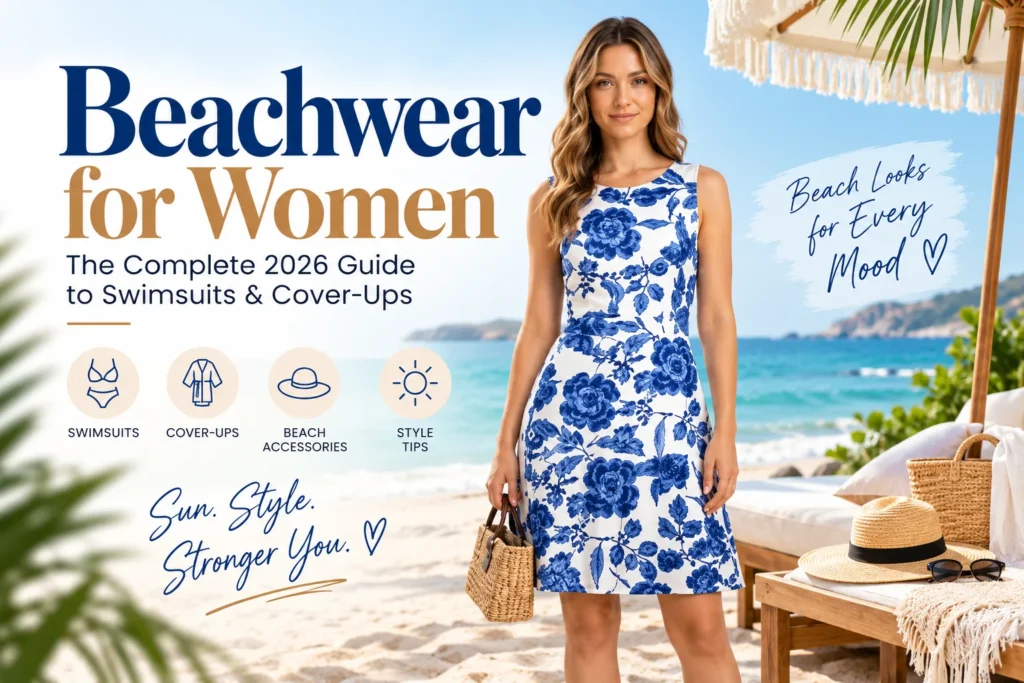
Beachwear covers everything worn in and around water swimsuits (bikinis, one-pieces, tankinis) plus the cover-ups, sarongs, and kaftans worn over them between the water and the boardwalk. The right combination depends on your body type, the fabric’s sun and salt-water resistance, and how much coverage you want between swimming and sitting down for lunch. Here’s how to choose both pieces with confidence.
Swimsuit vs. Cover-Up: What Each One Is For
- Swimsuit (bikini, one-piece, tankini): built for actually swimming chlorine/salt-resistant fabric, secure straps, quick-dry lining.
- Cover-up (kimono, sarong, crochet dress, tunic): worn over the swimsuit for walking to lunch, sun protection, or modesty not meant to get fully soaked repeatedly.
Buying one of each, in coordinating colors, is the easiest way to go from pool to restaurant without a full outfit change. For example, pair a tummy-control one-piece swim dress with a crochet tunic cover-up.
Choosing Beachwear by Body Type
| Body Type | Best Swimsuit Style | Best Cover-Up |
|---|---|---|
| Pear (fuller hips) | High-waisted bottoms, bold-print top | A-line kimono or tunic that skims the hips |
| Apple (fuller midsection) | One-piece with ruching or a wrap front | Empire-waist cover-up dress |
| Hourglass | Underwire top + matching bottom | Wrap-style cover-up that follows the waist |
| Athletic/rectangle | Bikini with ruffles or a bandeau | Belted kaftan to create shape |
| Petite | High-cut leg bikini bottoms | Mini or knee-length cover-up (avoid floor-length) |
| Tall/long torso | One-piece with a horizontal pattern | Maxi kaftan or long sarong |
Fabric & Fit: What to Check Before You Buy
- Nylon-spandex blend: the standard for swimsuits; holds shape and resists chlorine fading best.
- Polyester-spandex: more affordable, dries fast, slightly less shape retention over time.
- Crochet/lace cover-ups: breathable and stylish but offer minimal sun protection; layer with SPF underneath for long beach days.
- Chiffon/rayon cover-ups: lightweight and flowy, best for warm, low-wind days; can feel heavy when wet.
Buying tip: for swimsuits, look for at least 18–20% spandex content anything lower loses shape quickly after a few washes in salt or chlorinated water.
Styling Beachwear for Different Trips
Beach day / swimming: swimsuit + quick-dry cover-up + slide sandals + straw tote. Poolside resort: matching bikini and sarong set + wedge sandals + oversized sunglasses. Beach-to-dinner: bikini or one-piece under a longer kaftan dress, swapped for sandals with a heel and gold jewelry. Family/active beach day: one-piece or tankini for more coverage and movement, paired with a rash guard or loose tunic for sun breaks.
Packing Checklist for a Beach Trip
- 1 swimsuit per 2 days of the trip (so one is always dry)
- At least 1 cover-up that doubles as a dress for casual dinners
- A wide-brim hat or visor for extra sun protection
- Flat, water-friendly sandals (avoid new shoes you haven’t broken in)
Frequently Asked Questions
What’s the difference between a bikini cover-up and a beach dress?
A cover-up is typically sheer or lightweight and meant to be worn over a visible swimsuit, while a beach dress is often more opaque and can be worn on its own. Many cover-ups (like crochet or lace styles) function as both. This halter swing beach sundress is a good example of a beach dress you can wear without a swimsuit underneath.
Can beachwear be worn as regular summer clothing?
Cover-ups and kaftans are increasingly worn as standalone summer dresses away from the beach pair with sandals and jewelry for a casual daytime look. Swimsuits themselves are not designed for that.
How do I stop my swimsuit from losing its shape?
Rinse in cold water immediately after swimming (chlorine and salt break down spandex fastest), avoid the washing machine and dryer, and let it air dry away from direct sun.
What beachwear works best for sun-sensitive skin?
Look for cover-ups labeled with UPF (UV Protection Factor) ratings, or choose tighter-weave fabrics like cotton-poplin over open crochet, which offers very little UV blocking.
Is a one-piece or a bikini more flattering?
Neither is universally more flattering it depends on the cut, not the category. A high-cut one-piece can be just as elongating as a high-waisted bikini; the right proportions matter more than one-piece vs. two-piece.
The Bottom Line
Good beachwear is really two purchases working together: a swimsuit built to handle water, and a cover-up built to handle everything after. Match them by body type and fabric, not just print, and one beach trip’s worth of pieces can double as summer basics all season.
Browse the full Beachwear collection to shop the styles covered in this guide. Still need the suit itself? Browse women’s swimwear.