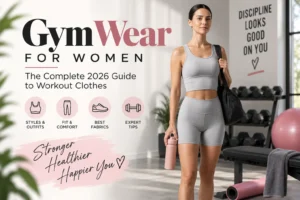
Gym wear is activewear built specifically for movement and sweat moisture-wicking tops, supportive sports bras, and stretch-fabric bottoms (leggings, shorts, or joggers) designed to move with the body rather than restrict it. The right pieces depend less on trends and more on the type of workout: what supports a high-intensity HIIT session will feel wrong for yoga, and vice versa. Here’s how to match gym wear to the way you actually train.
Matching Gym Wear to Your Workout Type
| Workout | Top | Bottom | Key Feature to Look For |
|---|---|---|---|
| Running/HIIT | Moisture-wicking tank or racerback tee | Compression leggings or bike shorts | High-support sports bra, sweat-wicking fabric |
| Weightlifting/strength training | Fitted tank or crop top | Squat-proof leggings or joggers | Non-sheer fabric under tension, flexible waistband |
| Yoga/Pilates | Soft, breathable tank | High-waisted, buttery-soft leggings | Four-way stretch, minimal seams |
| Cycling/spin | Fitted moisture-wicking top | Padded bike shorts | Sweat-wicking, non-chafing inner thigh seams |
| Outdoor/walking | Breathable T-shirt or long-sleeve | Joggers or looser leggings | Wind resistance, layering ease |
Fabric Guide: What Actually Matters in Gym Wear
- Polyester-spandex blend: the industry standard; wicks moisture, dries fast, holds shape through repeated washing.
- Nylon-spandex blend: slightly softer hand-feel, common in higher-end leggings, good four-way stretch.
- Cotton-blend: more breathable at rest but absorbs sweat rather than wicking it better for light stretching or walking than high-sweat training.
- Mesh panels: added at the knee, back, or underarm for extra airflow during high-intensity sessions.
Buying tip: check the fabric weight, not just the fiber content leggings under 250 gsm (grams per square meter) tend to go sheer during squats; anything above that holds opacity under stretch.
Choosing a Sports Bra by Activity Level
- Low impact (yoga, walking, strength training): compression-style bras with light support are usually enough.
- Medium impact (cycling, dance, elliptical): encapsulation-style bras with adjustable straps offer more shape and support.
- High impact (running, HIIT, jumping movements): combination bras (compression + encapsulation) with wide underbands minimize bounce best.
Leggings vs. Shorts: How to Decide
- Leggings: better for weightlifting (protects skin from equipment), outdoor runs in cooler weather, and full-range movement like yoga.
- Shorts: better for high-heat workouts, cardio-heavy sessions, and hot climates where airflow matters more than coverage.
- Bike shorts: a middle ground: thigh coverage without leg heat, ideal for HIIT, cycling, and mixed-cardio classes.
Layering for Outdoor or Cold-Weather Workouts
- Base layer: moisture-wicking tank or fitted long-sleeve against the skin.
- Mid layer: a lightweight zip-up or pullover that traps warmth without bulk.
- Outer layer: a windbreaker or light jacket, removed as body temperature rises.
Frequently Asked Questions
Here are some frequently asked questions given below:
What fabric is best for sweating a lot during workouts?
Polyester-spandex and nylon-spandex blends wick moisture away from the skin far more effectively than cotton, which absorbs sweat and stays wet. For high-sweat training, prioritize fabric labeled “moisture-wicking” over natural fibers.
Do leggings need to be squat-proof?
For any workout involving squats, lunges, or overhead stretching, yes non-squat-proof leggings can go sheer under tension. A quick test: stretch the fabric over your hand in a well-lit area before buying; if you can see your skin clearly through it, it isn’t squat-proof.
How tight should a sports bra be?
A properly fitted sports bra should feel snug but allow full breathing without digging into the shoulders or ribcage. You should be able to fit two fingers under the band comfortably. For bigger busts or high-impact training, a wireless high-impact sports bra gives more support, while a longline U-back sports bra adds coverage for lifting and yoga.
Can the same gym wear work for yoga and running?
Some pieces overlap high-waisted leggings work for both but running generally needs higher-support sports bras and more structured compression than yoga, which prioritizes stretch and softness over compression. For activity-specific pieces, see our yoga outfits and running outfits.
How often should gym wear be replaced?
Sports bras typically lose elasticity and support after 6–12 months of regular wear and washing; leggings and tops last longer but should be replaced once the fabric thins, pills heavily, or loses recovery (stays stretched out after wear).
Conclusion
The best gym wear isn’t the trendiest set it’s the one matched to how you actually train. Start by identifying your primary workout type, then build around the fabric weight and support level that activity demands; everything else (color, print, brand) is secondary to fit and function.
Browse the full Gym Wear collection to shop the styles covered in this guide.