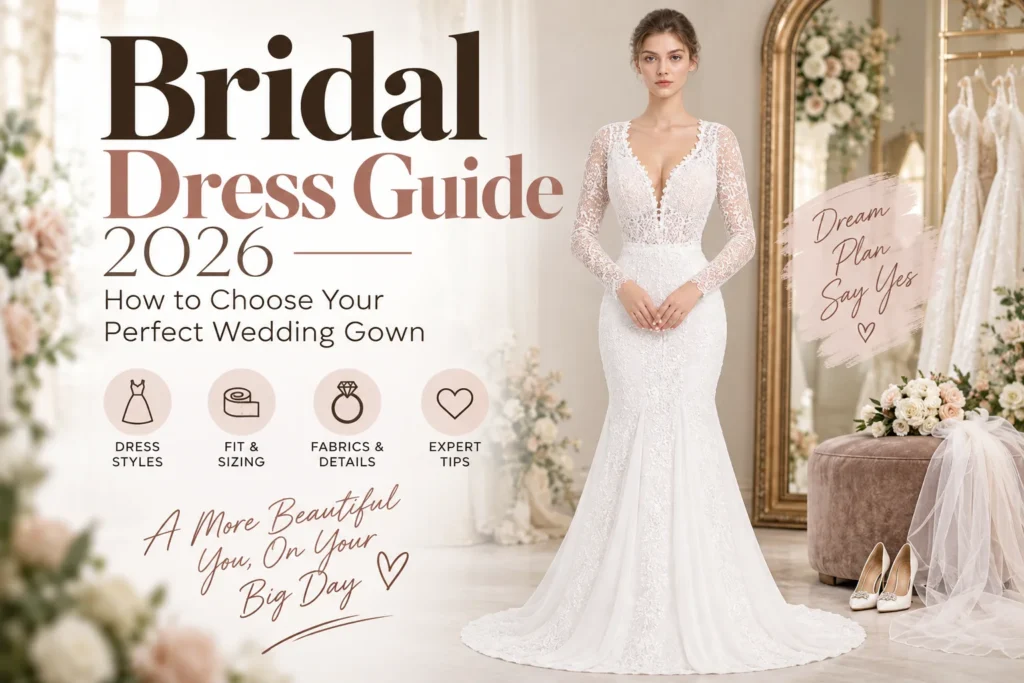
A bridal dress (or wedding gown) is the formal dress worn by the bride, typically built from structured fabrics like satin, chiffon, lace, or tulle, and defined by its silhouette A-line, mermaid, ball gown, sheath, or empire waist. Choosing the right one comes down to three things: your body shape, your wedding’s formality and venue, and your budget for alterations. This guide walks through all three.
The 5 Main Bridal Gown Silhouettes
| Silhouette | Shape | Best For |
|---|---|---|
| A-line | Fitted bodice, gradually flares from the waist | Almost every body type the most universally flattering cut |
| Ball gown | Fitted bodice, dramatic full skirt | Formal, traditional weddings; hourglass and pear shapes |
| Mermaid/trumpet | Fitted through hip, flares at knee | Hourglass shapes; requires confidence in a fitted cut |
| Sheath/column | Slim, straight line top to bottom | Petite and tall slim frames; beach or minimalist weddings |
| Empire waist | Fitted under the bust, flows loosely below | Apple shapes, pregnancy, or a soft romantic look |
Choosing a Bridal Dress by Body Type
- Pear shape (hips wider than shoulders): A-line or ball gown styles balance the proportions; avoid mermaid cuts that emphasize the hip line.
- Apple shape (fuller midsection): Empire waist or A-line with a defined bust line skims the stomach.
- Hourglass shape: Mermaid or fitted sheath styles follow your natural waist this shape can wear almost any silhouette.
- Rectangle/athletic shape: Ball gowns or dresses with ruching create curve; a belt at the natural waist adds definition.
- Petite frames: Sheath or A-line with a shorter train a ball gown can visually overwhelm a smaller frame.
- Tall frames: Mermaid or trumpet styles showcase the silhouette well; a long train and cathedral veil balance the height.
Fabric Guide: What Each Material Means for Comfort and Look
- Satin: structured, holds shape well, best for ball gowns and formal indoor weddings.
- Chiffon: lightweight and flowy, ideal for outdoor, beach, or summer weddings.
- Lace: adds texture and detail, often layered over satin or tulle; classic and romantic.
- Tulle: used mainly for ball gown skirts and veils; adds volume without much weight.
- Crepe: soft, matte, and body-skimming; popular for minimalist sheath styles.
Buying tip: for an outdoor or destination wedding, prioritize chiffon or crepe over heavy satin and tulle both breathe better and travel (pack) far more easily.
Neckline & Sleeve Options Worth Knowing
- Off-shoulder: romantic, flattering for most shoulders and collarbones.
- Sweetheart: classic curved neckline, enhances the bust without being low-cut.
- Strapless: timeless, works well with statement jewelry.
- Long-sleeve/illusion sleeve: increasingly popular for fall/winter weddings and modest coverage.
- Halter: elongates the neck, best for broader shoulders and an hourglass frame.
Budget & Timeline Tips
- Order 6–9 months ahead: of the wedding date to allow for alterations, which can take 2–3 fittings.
- Set aside 10–15% of the dress cost for alterations: even off-the-rack gowns almost always need hemming, bust adjustments, or a bustle for the train.
- Buy the cover-up/veil separately: if budget is tight a simple gown with a statement veil often reads as more expensive than a heavily embellished dress on its own.
Frequently Asked Questions
What is the difference between a wedding dress and a bridal gown?
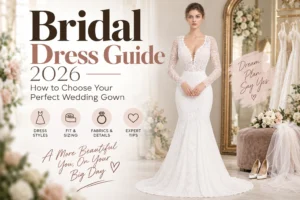
The terms are used interchangeably in most contexts. “Bridal gown” sometimes implies a more formal, ball-gown-style dress, while “wedding dress” is the broader umbrella term covering any style the bride wears from simple sheath dresses to full ball gowns. Fitted styles like this lace mermaid bridal gown sit at the formal end of the range.
How far in advance should I buy my bridal dress?
Most bridal experts recommend ordering 6–9 months before the wedding to leave time for alterations. If your wedding is sooner, look specifically for “off-the-rack” or ready-to-ship gowns rather than made-to-order styles. If you’re also dressing the wedding party, start looking at bridesmaid and mother of the bride dresses at the same time.
What silhouette is most flattering for a pear-shaped body?
A-line and ball gown silhouettes are generally the most flattering for pear shapes because the flared skirt balances wider hips. Mermaid and trumpet cuts tend to draw more attention to the hip area. A strapless A-line wedding gown is a classic example.
Can I wear a colored or non-white bridal dress?
Yes ivory, champagne, blush, and even soft pastel bridal gowns have become widely accepted, especially for non-traditional or second weddings. There is no rule requiring pure white.
How much does a bridal dress typically cost?
Bridal dress prices vary enormously by brand, fabric, and embellishment level from budget-friendly ready-to-wear gowns to designer pieces costing many times more. Setting a clear budget before browsing, including alterations, helps narrow the search quickly.
The Bottom Line
The right bridal dress balances three things: a silhouette that flatters your body, a fabric suited to your venue and season, and a budget that accounts for alterations, not just the sticker price. Start with silhouette, since that decision narrows everything else fabric, neckline, and accessories almost automatically.
Browse the full Bridal Dress collection to shop the styles covered in this guide.